Intents · Concept
Books that teach supply & demand
Children's books where the plot dramatizes real economic forces — supply, demand, pricing — without ever feeling like a textbook.
9 books
by Barbara Cooney
Picture book · ages 4–8 · grades K–3 · 620L
A Caldecott triumph that teaches supply-and-demand economics and seasonal patience through lyrical understatement—Cooney's watercolors make the repetition sing, not bore.
Why this fits: The entire arc follows a farmer's year of labor producing goods (maple syrup, flax, apples, crafts) that he hauls to market and sells, then reinvests proceeds in supplies for the next cycle — a vivid, lived demonstration of production, exchange, and seasonal interdependence.
Learn more →

by Jonathan Evison
Middle grade · ages 10–14 · grades 5–9 · 780L · 2018
The rare middle-grade novel that makes entrepreneurship and microeconomics tangible without preaching; funny enough to reread, instructive enough to spark backyard schemes.
Why this fits: The entire book hinges on the protagonist discovering he can build a lawn-care empire by identifying unmet demand in his neighborhood; the narrative explicitly tracks pricing, customer acquisition, and service differentiation.
Learn more →·Bookshop.org
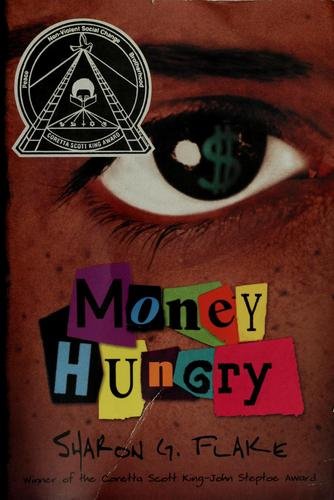
by Sharon G. Flake
Middle grade · ages 8–12 · grades 3–7 · 750L · 2003
A sharp, unflinching look at a kid building a school-supply monopoly and discovering that hustle culture and friendship don't automatically go together—Flake writes dialect-forward and doesn't soften the girl's ambition or the mess she makes.
Why this fits: Jamir's core conflict centers on understanding why people will pay for her school supplies and how to identify what others need and will buy—she negotiates prices, manages inventory, and learns when demand outstrips supply.
Learn more →·Bookshop.org

by Alex Mayyasi and the hosts of NPR’s “Planet Money”
Nonfiction · ages 8–12 · grades 3–7 · 750L · 2026
Turns Planet Money's podcast magic into chapters kids can read alone—accessible without dumbing down, and genuinely funny because the real stories are weird.
Why this fits: Uses concrete real-world stories (e.g., why movie tickets cost what they do, how restaurants set prices) to ground supply-and-demand mechanics without abstraction.
Learn more →·Bookshop.org
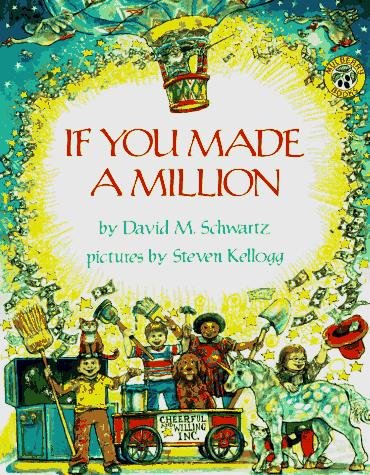
by David M. Schwartz
Picture book · ages 4–8 · grades K–3 · 620L · 1994
The funniest economics primer for early readers—absurd scenarios (lemonade, lion-taming, shoelace-tying) make money tangible without feeling didactic; kids remember it.
Why this fits: Implied through various earning scenarios—people pay more for riskier or rarer circus acts, touching on why different work commands different compensation.
Learn more →·Bookshop.org

by Jacqueline Davies
Chapter book · ages 8–12 · grades 3–7 · 630L · 2007
The best economics primer for this age—kids love the rivalry, and the math clicks because it's their own money at stake; bonus: sibling conflict feels genuinely earned, not manufactured.
Why this fits: The entire plot turns on Jess and Evan running competing lemonade stands; they discover pricing strategy, customer loyalty, and market saturation firsthand—e.g., when Evan undercuts Jess, then discovers he's lost money overall.
Learn more →·Bookshop.org
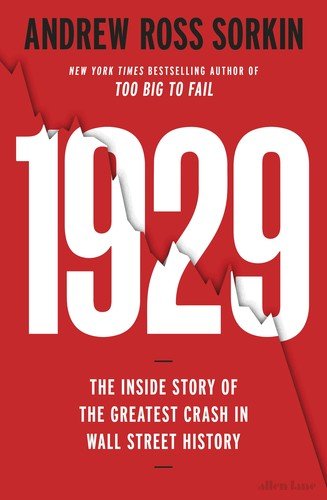
by Andrew Ross Sorkin
Nonfiction · 1100L · 2025
Authoritative and readable for a motivated 13+, but pitched at adult comprehension of financial mechanics—works best as a parent-guided deep-dive into how markets can break, not as independent reading.
Why this fits: The book traces how speculative excess, margin buying, and disconnection between asset prices and underlying value created the bubble that burst in 1929—a vivid case study in demand outpacing reality and systemic vulnerability.
Learn more →·Bookshop.org

by Haiming Liu
Nonfiction · 1050L · 2015
Serious academic history that treats Chinese-American restaurants as central to immigration and economic history, not a side story; genuinely educational but demands sustained attention and prior context about U.S. immigration policy.
Why this fits: The narrative shows how Chinese restaurants adapted menus to American tastes and economic pressures, illustrating how supply (what immigrant chefs could cook) intersected with demand (what American diners would eat).
Learn more →·Bookshop.org

by Tim Harford
Nonfiction · 1050L · 2007
Witty and rigorous economic primer aimed at adults; too dense and abstract for the 5–9 set, and children lack the real-world context (housing markets, airline revenue management) that makes examples stick.
Why this fits: The book uses real-world examples (diamonds, coffee, airline pricing) to illustrate how markets balance supply and demand; Harford walks readers through why prices move and what incentives shape economic behavior.
Learn more →·Bookshop.org
