Intents · Concept
Books about trying, failing, trying again
The growth-mindset canon — protagonists who fail, get frustrated, and come back to iterate.
11 books
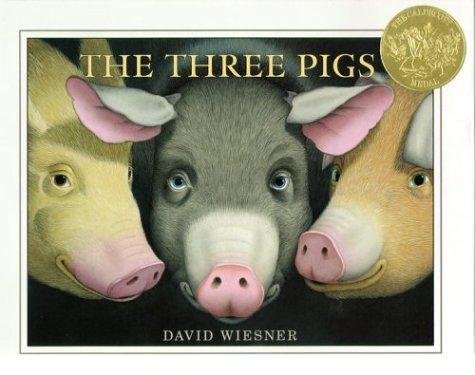
by David Wiesner
Picture book · ages 4–8 · grades K–3 · 2012
A wordless masterpiece that teaches iteration and agency through anarchic visual storytelling—kids laugh at the absurdity while absorbing how failure leads to better solutions.
Why this fits: The pigs repeatedly build houses that fail (straw, sticks, brick), learning through each iteration what works and what doesn't—a visual-narrative demonstration of trial-and-error problem-solving.
Learn more →·Bookshop.org
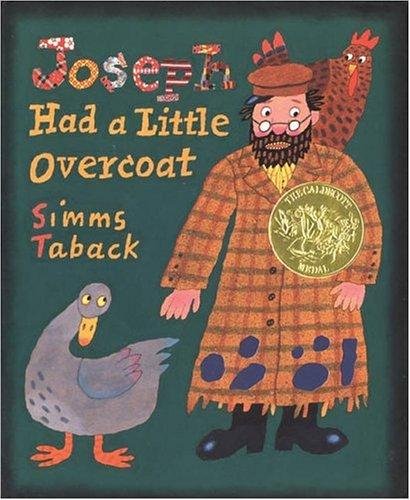
by Simms Taback
Picture book · ages 4–8 · grades K–3 · 1999
A Caldecott winner with genuine visual wit and a sneaky economics lesson — kids trace the transformation, parents notice Joseph's refusal to waste and his creative persistence.
Why this fits: The core narrative arc—transforming the overcoat into successively smaller garments through wear and creative repurposing—models how constraints drive innovation. Joseph remakes his coat repeatedly, finding new solutions each time something wears out.
Learn more →·Bookshop.org
by Brian Selznick
Picture book · ages 6–9 · grades 1–4 · 620L
A biography of a real Victorian artist-scientist that teaches how knowledge evolves through obsessive observation and making—Selznick's illustrations are themselves a masterclass in using image to show process.
Why this fits: Hawkins' early dinosaur sculptures are crude; he learns from each attempt, refines his understanding of anatomy as new fossils arrive, and rebuilds his models. The book celebrates how mistakes and revisions led to better science.
Learn more →
by Barney Saltzberg
Picture book · ages 3–7 · grades K–2 · 2010
A near-perfect picture book that genuinely teaches growth mindset through example rather than lecture — kids internalize that mistakes are invitations, not disasters.
Why this fits: The entire premise of the book is that 'mistakes' (torn pages, spills, scratches, folded corners) become the starting point for new creative solutions. Each 'oops' is reframed as an opportunity, teaching children that failure is iterative and generative.
Learn more →·Bookshop.org
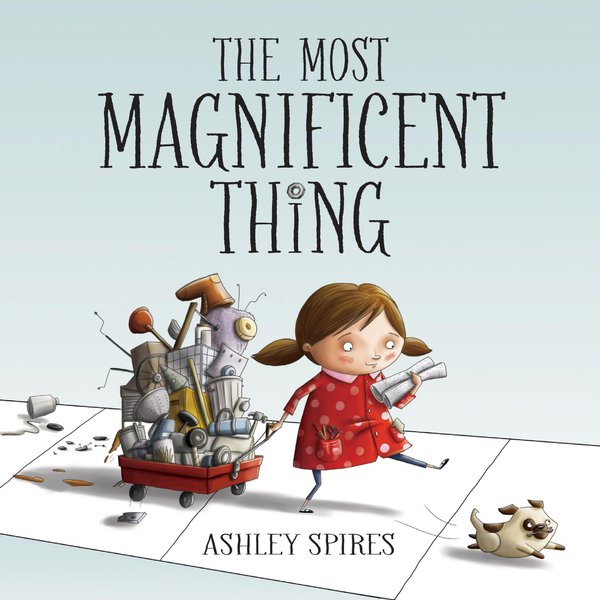
by Ashley Spires
Picture book · ages 4–8 · grades K–3 · 520L · 2014
The best book about failure and iteration for this age—honest about frustration, funny about the messy process, and the ending actually earns its payoff instead of rushing to inspiration.
Why this fits: The protagonist spends the entire narrative failing at her project, becoming visibly frustrated, and learning that 'magnificent' requires multiple attempts and abandoned designs. The book teaches that failure is a necessary step, not a dead-end.
Learn more →·Bookshop.org
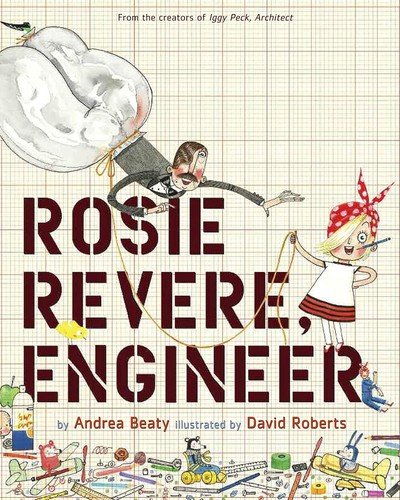
by Andrea Beaty
Picture book · ages 4–8 · grades K–3 · 620L · 2013
The rare picture book that introduces iteration and failure as *positive forces* without being preachy — Rosie's joy in building matters as much as the lesson.
Why this fits: The core plot tracks Rosie designing, building, and testing a flying machine that fails repeatedly. She learns that failure is a necessary step toward innovation, not a reason to quit. The final invention succeeds because she iterated.
Learn more →·Bookshop.org
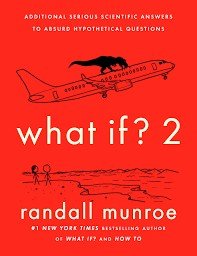
by Randall Munroe
Nonfiction · 1050L · 2022
A legitimately smart book disguised as humor — kids discover that rigorous thinking is funnier than jokes, and accidentally develop comfort with math and physics.
Why this fits: Several answers acknowledge dead ends and refinements (e.g., 'first I thought X, but then realized Y'), modeling productive failure as part of problem-solving.
Learn more →·Bookshop.org
by David Pogue
Nonfiction · ages 8–12 · grades 3–7 · 820L
Pogue makes tech history and product design genuinely gripping for kids who care about how things work—fast-paced, not dumbed down, with sidebars and graphics that keep the eye moving.
Why this fits: The book chronicles Apple's product failures and pivots—Newton, early iPods, failed iterations—showing how companies learn from mistakes to reach breakthrough design.
Learn more →·Bookshop.org
by Maya Shankar
Nonfiction · 1050L
A rare adult pop-psych book accessible to older middle-graders who like concrete strategies; best with a parent who can co-read and anchor examples to the kid's own goals.
Why this fits: Core premise: most change fails because people expect willpower to work; Shankar teaches that failure is data, not a character flaw. She systematically walks through why iteration and small experiments work better than grand resolutions.
Learn more →·Bookshop.org
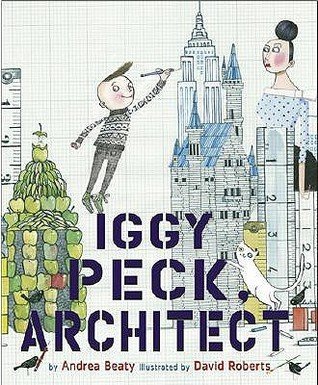
by Andrea Beaty
Picture book · ages 4–8 · grades K–3 · 650L · 2007
Smart, funny picture book that validates creative kids who don't fit the mold—Beaty's rhyme carries the plot, and the architecture payoff feels earned rather than preachy.
Why this fits: Iggy's buildings collapse and fail repeatedly, but he persists and learns from the failures, ultimately building something that works—a light introduction to learning through experimentation.
Learn more →·Bookshop.org
by Nassim Nicholas Taleb
Nonfiction · 2012
Intellectually ambitious but written for adult audiences; the prose is deliberately provocative and dense, making it unsuitable for the 5–9 age band and most of the 10–14 band.
Why this fits: The book's central thesis is that systems and organisms benefit from volatility, small failures, and stressors. Taleb argues that antifragility—improving through disorder—is cultivated by repeated exposure to small shocks and failures, not protection from them.
Learn more →·Bookshop.org
